
Water Damage & Restoration in New Braunfels, TX
Local Water Damage & Fire Damage Expertise
New Braunfels sits at the heart of Central Texas flood country, where the Comal and Guadalupe rivers run through town and unpredictable heavy rains demand fast action. Our water damage restoration service and fire damage restoration service are built for properties across New Braunfels—from historic neighborhoods near Academy Avenue to newer communities like River Chase and Havenwood at Hunters Crossing. Whether you're dealing with river-fed flooding, stormwater backup, or fire smoke damage, we arrive ready to protect your home or business.
How We Work
Our process is clear and transparent—we assess, act, and restore with steady progress you can track every step.
Our Restoration Steps
Emergency Assessment
We inspect all affected areas, measure moisture levels, and identify structural hazards. Fast diagnosis means smarter recovery plans.
Water Extraction & Removal
High-capacity pumps and extraction equipment remove standing water from every level—basements, crawl spaces, and saturated foundation soil common in Gruene and riverside homes.
Structural Drying
Industrial dehumidifiers and air movers dry walls, flooring, and hidden cavities. We monitor moisture continuously to prevent mold growth in the heat and humidity New Braunfels homes face.
Cleanup & Mold Prevention
We remove debris, sanitize affected areas, and apply antimicrobial treatments. New Braunfels' high moisture levels make mold risk real—we head it off before it takes root.
Repairs & Restoration
Damaged drywall, flooring, cabinetry, and structural elements are repaired or replaced. We match materials to your home's original condition.
Final Inspection & Handoff
We verify moisture levels are normal, test systems, and walk you through any ongoing care. You'll have full documentation for insurance and peace of mind.
You'll always know what's happening next—and when.
Our Services
We handle the full range of water and fire damage recovery for New Braunfels homes and businesses.
Water Damage Services
Flooding from the Comal River, backed-up sewage, burst pipes, and ice dam leaks can happen in any season. We extract water fast and dry structures thoroughly before mold settles in.
- Emergency water extraction and flood cleanup
- Basement and crawl space drying with monitoring
- Carpet, hardwood, and tile restoration or replacement
- Drywall and insulation removal and replacement
- Content restoration and odor removal
- Mold remediation and prevention treatments
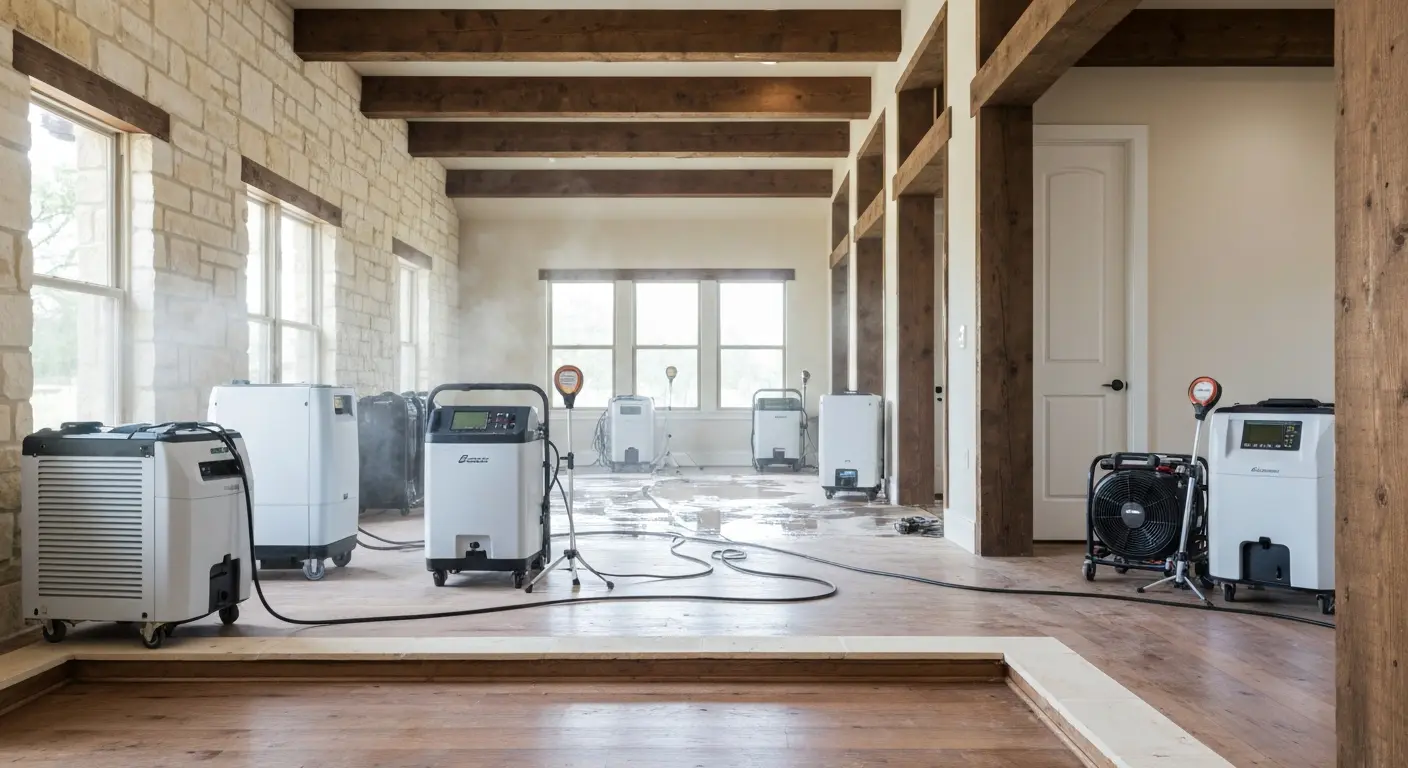
Water extraction and drying work in river-adjacent neighborhoods like River Chase and Gruene
Fire Damage & Smoke Restoration
House fires leave soot, char, smoke odor, and structural damage across New Braunfels homes. We restore structure and contents, remove ash residue from every surface, and eliminate smoke smell using specialized equipment.
- Fire suppression and water damage cleanup
- Soot and ash removal from walls, fixtures, and belongings
- Structural repair of burned wood, drywall, and framing
- HVAC and ductwork cleaning and restoration
- Smoke odor elimination using ozone and enzymatic treatments
- Contents restoration and deodorization
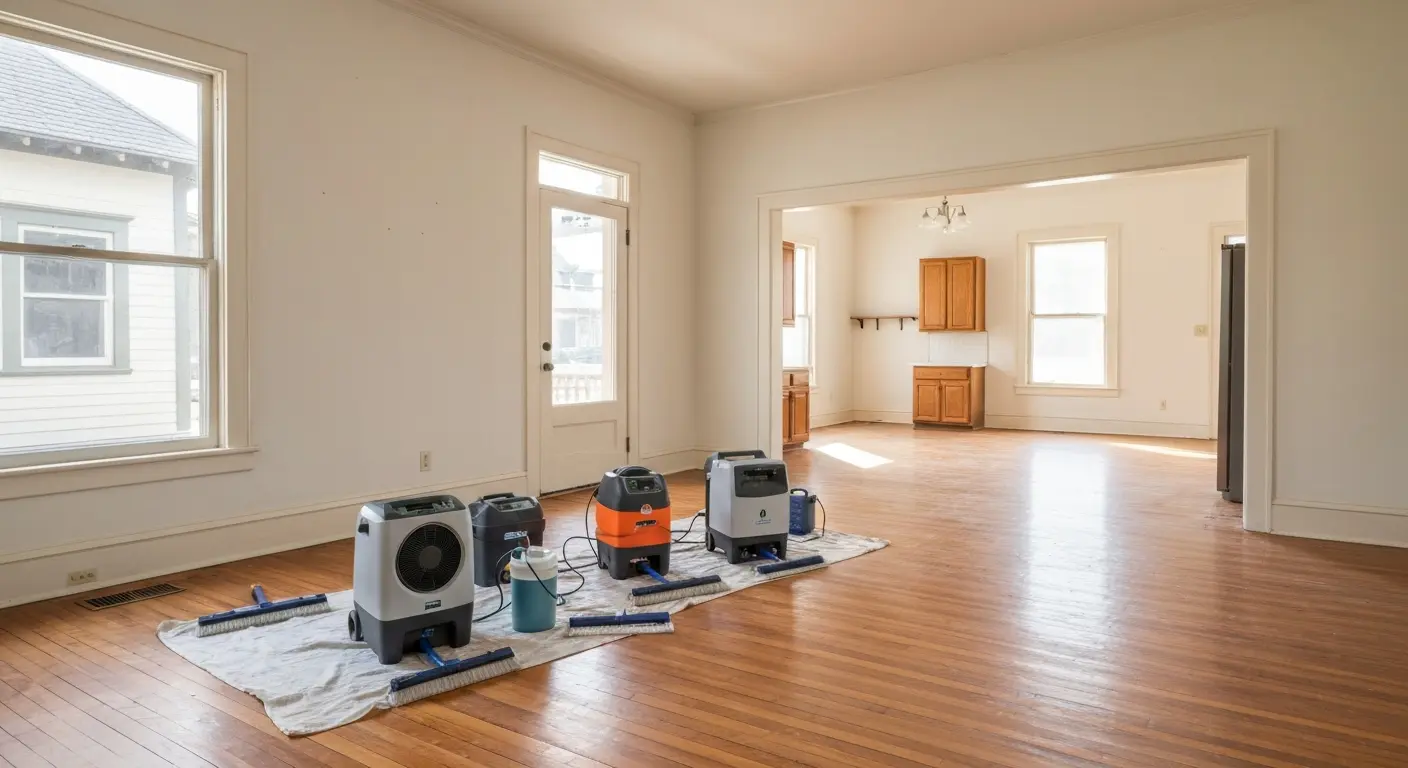
Soot and smoke recovery in residential areas like Havenwood and historic downtown New Braunfels
Storm & Flood Recovery
New Braunfels sits in one of the nation's flood hotspots. When spring rains swell the Guadalupe and Comal rivers, or summer storms overwhelm drainage systems, we respond with equipment and crews ready for large-scale water removal.
- Rapid flood extraction from homes in Vintage Oaks, Manor Creek, and riverside properties
- Standing water removal from yards, crawl spaces, and basements
- Debris removal and yard cleanup after flooding
- Foundation inspection and stabilization checks
- Dried-in restoration and mold prevention during high-humidity recovery
Why Local Expertise Matters
New Braunfels is flood and fire country. Knowing this city's risks means smarter recovery.
Why New Braunfels Needs Water Damage Expertise
New Braunfels and San Antonio are among the most flood-prone regions in North America. The city sits where the Balcones Fault creates a drainage divide—water flows fast and unpredictably. May through October bring heavier rains; the clay-heavy soil common here exacerbates pooling and foundation seepage.
Key fact: Central Texas has been identified as the most flash-flood-prone area in the United States. Historic floods in 1998 (costliest in U.S. history) and 2002 underscored the danger.
Properties near Landa Park, Gruene Crossing, and along River Road face standing water and seepage. Older homes in the historic Sophienburg Hill and Mill Street districts have pre-1930 foundations that absorb water easily. Even newer subdivisions like River Chase and Pecan Crossing manage stormwater runoff that can overwhelm local drainage.
What We Know About Your Neighborhood
We understand New Braunfels' building stock—from German-Texan cottages in downtown to sprawling Hill Country estates in Havenwood at Hunters Crossing and Copper Ridge. We know which neighborhoods sit lowest relative to river elevation, which soils drain poorly, and where municipal water backup happens most often.
Quick insight: Many New Braunfels homes sit on acreage with septic systems or shallow irrigation—both create water stress in wet seasons. We inspect these upfront.
Fire & Smoke Risk Awareness
Dry summer winds and proximity to brush-prone Hill Country increase wildfire risk. Electrical fires in older homes are also common due to aging infrastructure. Smoke travels far and lingers—soot penetrates HVAC systems and furniture in homes across multiple neighborhoods simultaneously.
We handle post-fire restoration with the knowledge that New Braunfels' historic building styles require careful structural assessment and specialized deodorization for the high-humidity climate.
Serving All New Braunfels Neighborhoods
We respond across New Braunfels and surrounding Comal County communities.
Quick Access to Your Area
From River Chase (west of Gruene along FM 306) to Havenwood at Hunters Crossing (northeast on Hunter Road), from Manor Creek (northwest gated community) to downtown's historic Mill Street and Academy Avenue neighborhoods—we serve all of New Braunfels. Local teams mean we arrive fast, understand your building type, and know the fastest routes through town during flooding.
Downtown & Historic Areas
Sophienburg Hill, Mill Street, Stock, and downtown properties built before 1930 with stone and wood foundations.
River Communities
River Chase, Gruene Crossing, and homes near Landa Park and River Road prone to Guadalupe and Comal river rise.
Hill Country Communities
Havenwood at Hunters Crossing, Vintage Oaks, Manor Creek, Copper Ridge, and gated Hill Country subdivisions.
Central Neighborhoods
Pecan Crossing, Oak Run, surrounding areas near Fischer Park, and residential clusters throughout Comal County.
New Braunfels is between San Antonio (32 miles south) and Austin (48 miles north). Canyon Lake sits to the northwest. Wherever you are in this growing city—whether you're in a newer subdivision or a vintage home on the outskirts—we reach you with the same speed and care.
Frequently Asked Questions
How quickly can you respond to a flooding emergency in New Braunfels?
We maintain 24/7 emergency standby for water damage calls across New Braunfels. Our teams deploy with full equipment as soon as dispatch confirms your location and damage scope. During peak flood seasons (May–October), we coordinate multiple crews for neighborhoods hard-hit by river rise or heavy rain.
Will the drying process disturb utilities or HVAC systems in my home?
We coordinate closely with your electric and gas utilities before deploying dryers and dehumidifiers. If your HVAC system took in water, we may isolate it during drying and have it professionally cleaned and inspected before restart. We preserve functioning systems wherever safe.
How do you prevent mold in New Braunfels' humid climate?
Humidity stays high year-round here. We run industrial dehumidifiers continuously during drying, monitor moisture readings daily in crawl spaces and cavities, apply antimicrobial treatments to prevent spore growth, and recommend follow-up inspections at 2–3 weeks post-drying. Early mold detection is critical in New Braunfels.
Do you work with insurance adjusters for flood and fire claims?
Yes. We document all damage with photos and moisture readings, provide detailed scope reports, and coordinate directly with your insurance company and adjusters. Many New Braunfels properties are in flood zones and require FEMA or flood insurance involvement—we guide that process.
Can you salvage possessions and documents damaged by water or smoke?
We salvage contents through controlled drying, document restoration (freezing and later thawing), and specialized cleaning for soot-covered items. Some belongings are a total loss, but we work to preserve what matters most. Proper documentation helps with insurance claims.
What happens if water seeps back into my foundation after we dry it?
We conduct post-drying inspections and may recommend foundation sealing or sump pump installation if groundwater is the cause. In New Braunfels' clay soil, proper drainage and grading are key to preventing recurrence. We advise on long-term preventive measures tailored to your property's location and drainage patterns.
DISCOVER WHAT OUR CUSTOMERS HAVE TO SAY ABOUT US
REVIEWS
proudly serving these areas
Austin, TX
Central Texas, TX
College Station, TX
Georgetown, TX
Killeen, TX
Leander, TX
New Braunfels, TX
Round Rock, TX
READY TO take the next step?
get a free quote TODAY!

QUICK LINKS
our services
service areas
operating HOURS
Mon: 12:00 am - 11:59 pm
Tue: 12:00 am - 11:59 pm
Wed: 12:00 am - 11:59 pm
Thu: 12:00 am - 11:59 pm
Fri: 12:00 am - 11:59 pm
Sat: 12:00 am - 11:59 pm
Sun: 12:00 am - 11:59 pm