
Storm Damage Roof Repair Austin, TX
Professional storm damage roof repair in Central Texas for hail and wind damage.
Local Storm Damage Roof Repair Expertise
In Central Texas, storm damage roof repair keeps homes safe after hail, high wind, and severe weather. Hailstones damage shingles and expose vulnerable areas. Strong winds lift and loosen materials. Flashing and gutters get dented. We inspect, document, and repair damage so your home stays dry and protected.
How We Work
Our approach focuses on thorough inspection, clear documentation, and expert repairs. We help you understand damage, navigate insurance, and restore your roof's integrity.
Assess Damage and Document Findings
After a storm, we conduct a professional roof inspection to identify all damage. We check shingles for hail dents and granule loss, examine flashing and vents, and look for lifted or missing shingles caused by wind.
We also inspect gutters and downspouts for collateral damage, check the attic for water penetration, and photograph all findings. Central Texas weather—intense hail and high winds—can cause damage that isn't immediately visible from the ground.
Hidden damage—such as loose flashing or bruised shingles—often leads to leaks and interior water damage if left unaddressed.
Repair or Replace Based on Damage Scope
Once we understand the full extent of damage, we recommend the best path forward. Localized damage to shingles, flashing, or gutters typically calls for targeted repairs. Widespread damage across multiple areas or older roofs may warrant replacement.
We explain the repair versus replacement decision clearly so you can make an informed choice. Our team uses quality materials built to withstand Central Texas weather patterns.
Inspection
Walk the perimeter and check for visible damage. Document missing shingles, dents in gutters, debris, and any signs of water infiltration inside.
Professional Assessment
Our team climbs the roof safely and inspects all components—shingles, flashing, vents, underlayment—to evaluate structural integrity.
Documentation
We photograph damage, mark affected areas, and provide a detailed report for your insurance claim. Photos show the severity and location of impact.
Repair or Replace
Based on damage scope, roof age, and structural integrity, we recommend repairs or full replacement. We explain the choice clearly.
You'll always know what's happening next—and when.
Our Services
We repair and replace roofs damaged by storms in Central Texas homes. From shingle repairs to complete roof replacement, we handle the full scope.
Shingle Repair and Replacement
Hail dents and wind damage loosen shingles and expose underlying material. We replace damaged shingles with quality materials that match your existing roof and withstand harsh Central Texas weather.
Missing or cracked shingles allow water infiltration that leads to leaks. We repair localized damage quickly to prevent interior water damage and mold growth.
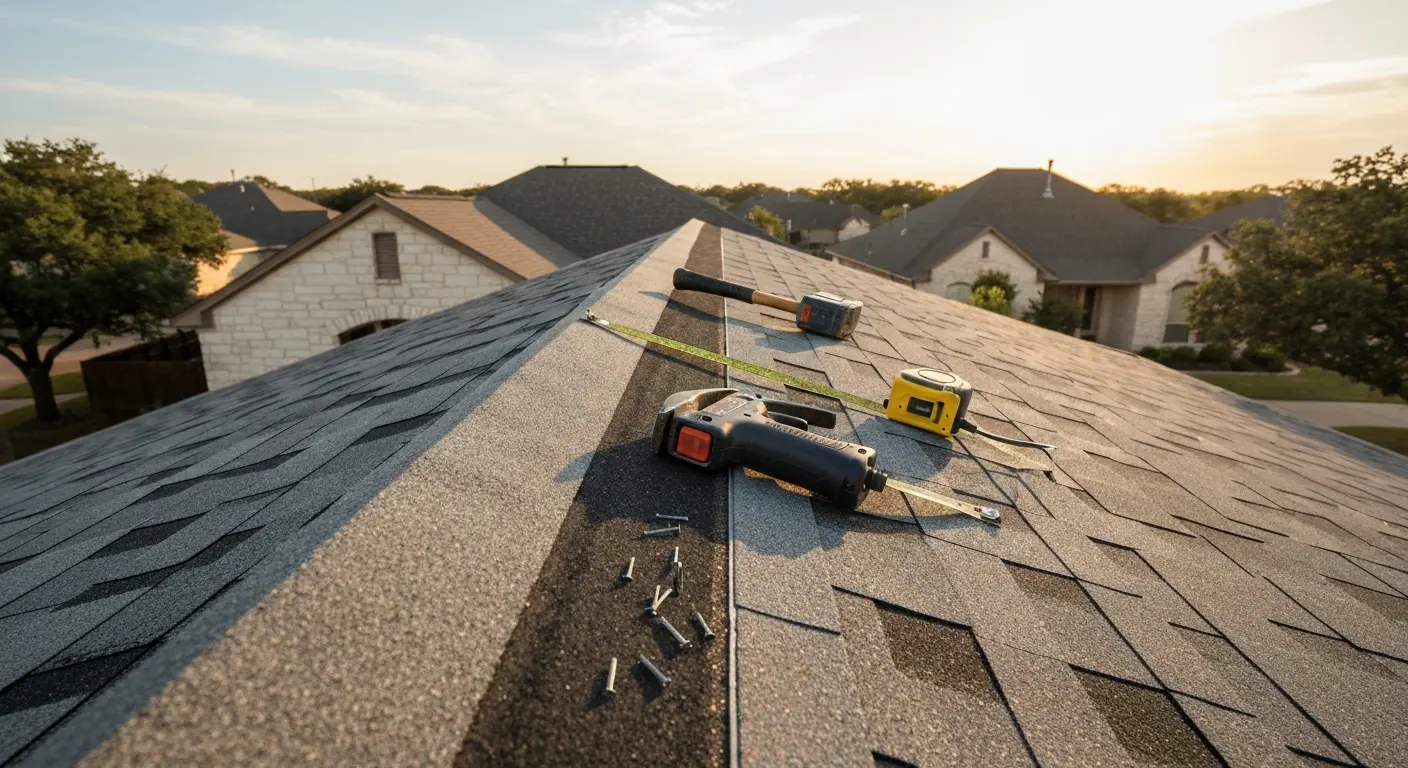
Professional shingle replacement for Central Texas homes affected by hail and wind.
Flashing and Vent Repair
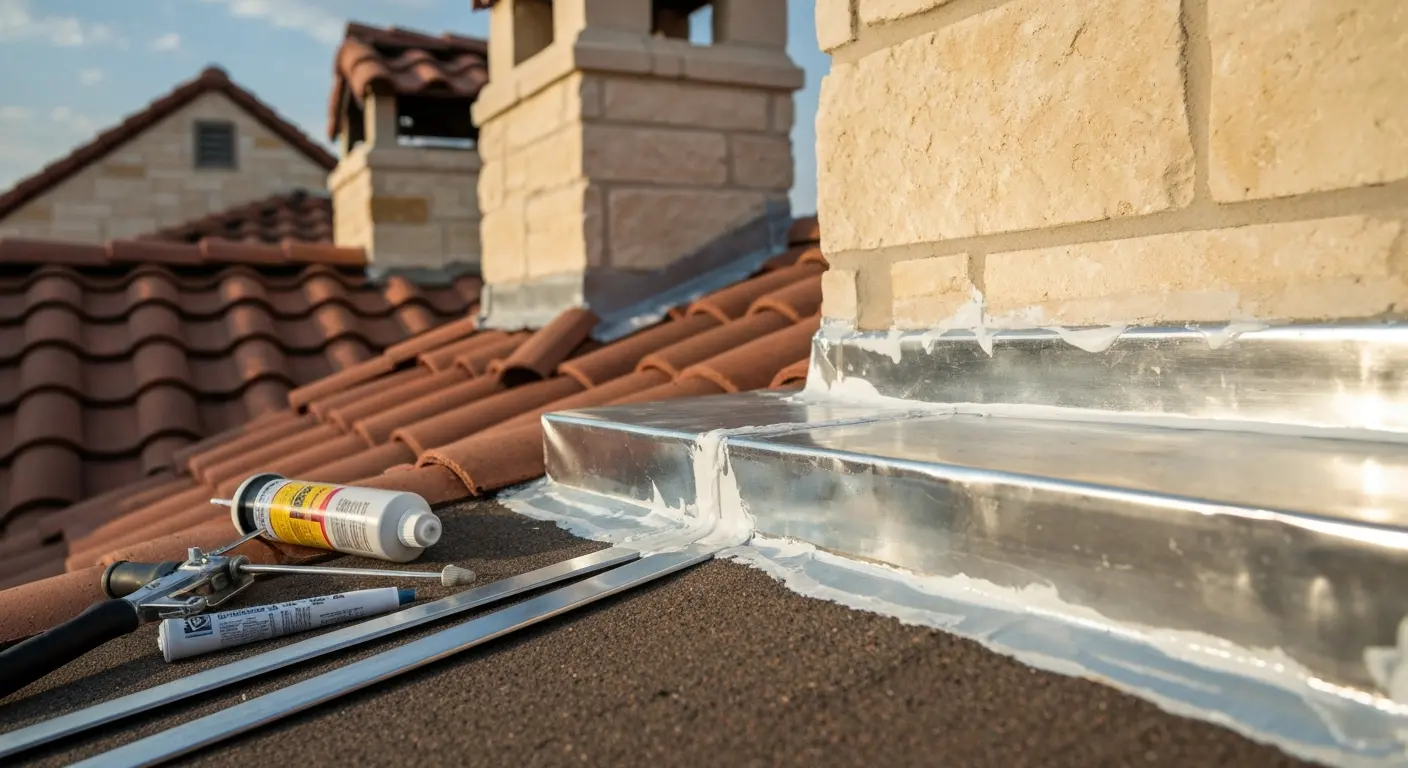
Flashing restoration where vents and chimneys meet the roof in Central Texas homes.
Flashing seals the gaps around chimneys, vents, and skylights. High winds and hail dent or loosen metal flashing, creating entry points for water. We repair and reseal flashing to restore the waterproof barrier.
Vent boots and metal components may show dents from hail impact. We straighten, repair, or replace damaged vents to maintain roof integrity and prevent leaks around penetrations.
Gutter and Downspout Restoration
Gutters and downspouts channel water away from your roof and foundation. Hail impact creates dents and damage that compromise drainage. We repair dents and restore gutters so water flows properly.
Fallen branches and storm debris can knock gutters out of alignment. We straighten, reattach, and seal gutters to prevent water pooling on the roof or running down exterior walls.
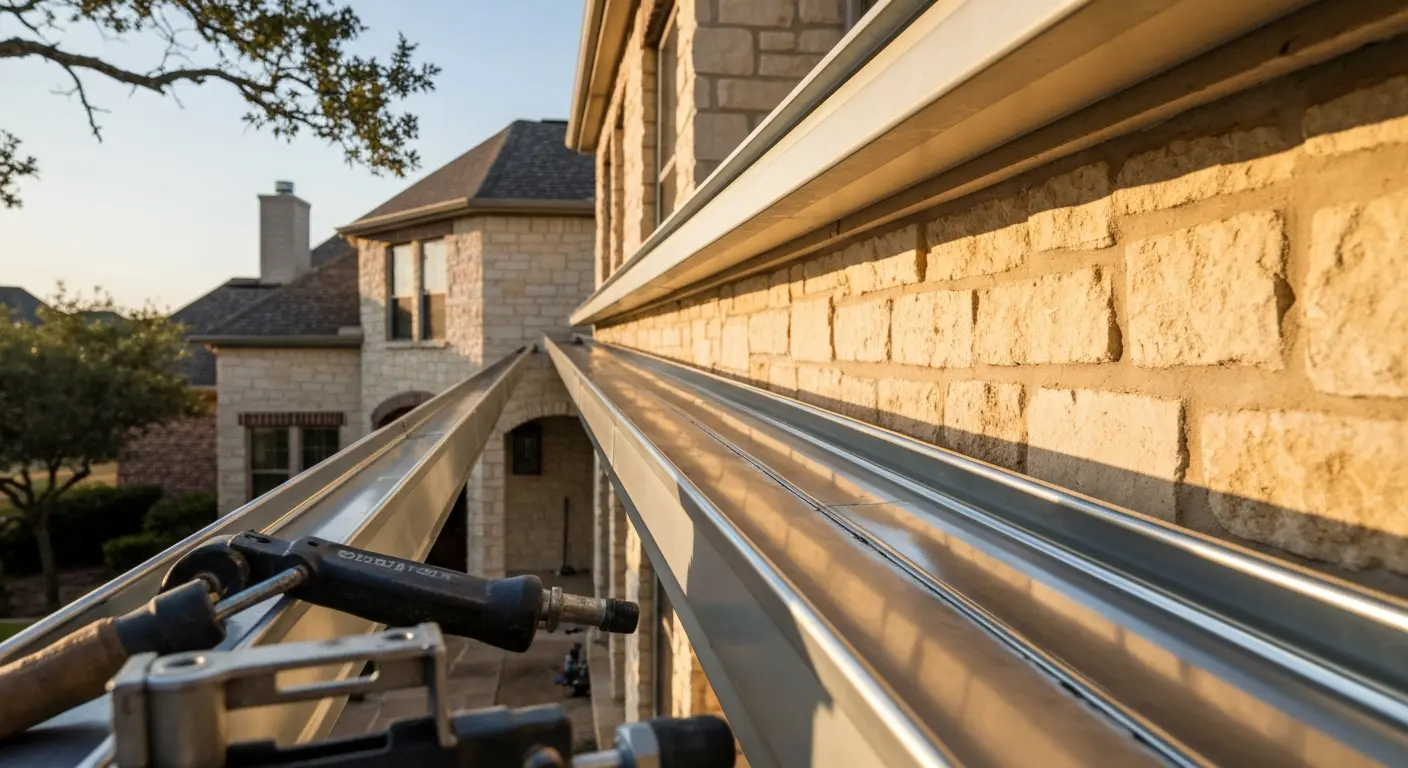
Gutter restoration after hail and wind damage in Central Texas.
Roof Replacement
When damage is widespread or your roof is near the end of its lifespan, full replacement is the most cost-effective option. We remove the damaged roof and install a new one with quality materials chosen for durability in Central Texas conditions.
A compromised roof puts your home at risk of water damage, mold, and structural decay. Full replacement restores protection and gives you a warranty-backed roof built to handle hail, wind, and severe weather common to this region.
Why It Matters
Storm damage left unaddressed escalates into costly problems. We explain why fast action protects your home and your investment.
Prevent Water Damage and Mold
Even small leaks from lifted shingles or cracked flashing allow water to penetrate the roof structure, insulation, and interior. Water saturation leads to mold growth, wood decay, and structural damage that costs far more to fix.
In Central Texas, where humidity and rainfall both occur, mold thrives in damp spaces. Professional repairs seal entry points quickly before water damage spreads to attic, drywall, and electrical systems.
Addressing roof damage within days of a storm protects interior spaces and prevents the exponential cost of water remediation.
File Insurance Claims with Confidence
Insurance companies require clear evidence of storm damage to approve claims. Our detailed inspection reports, photographs, and damage assessments provide the documentation you need. We help you navigate the process so your claim gets approved fairly.
Many homeowner policies cover storm-related roof damage. Our expertise ensures all damage is properly identified and documented, maximizing your coverage and reducing out-of-pocket costs for repairs.
Serving Central Texas and Surrounding Areas
We provide storm damage roof repair throughout Central Texas, where hail and high winds are seasonal weather realities.
Local Knowledge of Central Texas Weather
Our team knows the unique challenges of Central Texas weather. Spring and early summer storms bring intense hail and powerful winds. Temperature swings cause roofing materials to expand and contract, stressing fasteners and seals.
We choose materials and repair methods designed to survive these conditions. Our experience with local weather patterns helps us identify damage others might miss and recommend solutions built for durability in this region.
Central Texas records some of the nation's highest frequency of hail events and severe thunderstorms. We're built for this climate.
Licensed, Insured, and Available After Storms
We are fully licensed, bonded, and insured to repair roofs in Central Texas. Our inspectors work with insurance companies and understand their claim requirements. We document damage thoroughly and stand behind our work.
After major storms, we prioritize inspections for homeowners in our service area. We offer free assessments so you know the scope of damage before deciding on repairs. No high-pressure sales—just honest expertise.
Featured Insight
Answer the question homeowners ask most after a storm.
What should I do immediately after a storm damages my roof in Central Texas?
First, ensure your safety. Stay off the roof and avoid downed power lines. Walk your property's perimeter and look for obvious damage—missing shingles, dents in gutters, debris. Check the interior of your home, especially the attic and ceiling, for water leaks or stains. Document what you see with photos. Then call a licensed roofing contractor to schedule a professional inspection. We photograph damage, assess the full scope, and provide a report for your insurance company.
Professional inspection within 24–48 hours prevents minor issues from becoming major water damage and strengthens your insurance claim.
Frequently Asked Questions
Common questions about storm damage roof repair in Central Texas.
How do I know if my roof has hail damage?
Look for circular dents or bruises on shingles, missing granules that expose the underlying fiberglass mat, and dark spots indicating hail impact. Check gutters and downspouts for dents, which indicate hail exposure. Use binoculars from the ground—do not climb onto the roof yourself. Professional inspection reveals damage that's not visible from below.
Will homeowner insurance cover my storm damage roof repair?
Most homeowner insurance policies cover roof damage from covered perils like hail, wind, and lightning. They typically do not cover normal wear and tear or poor maintenance. Damage caused by storms qualifies for coverage in most cases. Review your policy or call your agent to confirm your deductible and coverage limits. We help document damage to support your claim.
Should I repair or replace my roof after storm damage?
Repair is often best when damage is localized, your roof is relatively new, and the structure is intact. Replacement makes sense if damage is widespread, your roof is near the end of its lifespan, or the cost of repeated repairs approaches replacement cost. We assess damage and recommend the option that protects your home and budget.
What should I avoid after discovering storm damage to my roof?
Never climb onto a wet, icy, or steep roof—you risk injury. Avoid signing contracts with contractors who arrive immediately after storms and pressure you for fast decisions. Ignore estimates that seem unrealistically low. Do not file an insurance claim without a professional inspection—unnecessary claims affect your insurance record. Always verify licensing and insurance before hiring a contractor.
How long should I wait after a storm to have my roof inspected?
Schedule an inspection within 24–48 hours after the storm ends and it's safe to do so. Early documentation helps prevent water damage from escalating and provides timely evidence for insurance claims. Many insurance policies require claims to be filed within a set window. Fast action protects your home and strengthens your position with the insurance company.
Can I inspect my roof for damage myself?
You can walk the perimeter and use binoculars to look for obvious signs—missing shingles, dents in gutters, debris. But do not climb onto the roof. Professional inspection is essential because significant damage is often subtle and invisible from the ground. Bruised shingles, loosened flashing, and decking damage require expert eyes and hands-on evaluation to identify properly.
DISCOVER WHAT OUR CUSTOMERS HAVE TO SAY ABOUT US
REVIEWS
proudly serving these areas
Austin, TX
Central Texas, TX
College Station, TX
Georgetown, TX
Killeen, TX
Leander, TX
New Braunfels, TX
Round Rock, TX
READY TO take the next step?
get a free quote TODAY!

QUICK LINKS
our services
service areas
operating HOURS
Mon: 12:00 am - 11:59 pm
Tue: 12:00 am - 11:59 pm
Wed: 12:00 am - 11:59 pm
Thu: 12:00 am - 11:59 pm
Fri: 12:00 am - 11:59 pm
Sat: 12:00 am - 11:59 pm
Sun: 12:00 am - 11:59 pm