Water Damage & Restoration in Leander, TX
Local Water Damage & Fire Restoration Expertise
Leander homes and businesses face unique water damage challenges—from flash flooding near Big Sandy Creek in northwestern areas to burst pipes in newer subdivisions like Crystal Falls and Sarita Valley. When disaster strikes, rapid water damage restoration service in Leander, TX is critical. Fire damage restoration also matters here, especially in Hill Country communities where wildfire and structure fires pose real risks.
This page explains emergency water mitigation, extraction, structural drying, and fire cleanup—what happens first, how professionals assess damage, and why prompt action saves your property and health.
Learn what to expect when you call for help, and how local expertise protects Leander's growing neighborhoods.
How We Work
When water floods your basement in Bryson Ridge or fire damages your Downtown Leander home, the first hours matter most.
What's Involved: Five Key Steps
Restoration follows a proven sequence. Each step protects your property and health—stopping mold growth, salvaging materials, and preventing secondary damage.
Emergency Contact & Assessment
We arrive ready to respond. A technician photographs damage, checks for mold, tests moisture levels in walls and subflooring, and creates a restoration plan for your Leander property.
Water Extraction & Removal
Powerful pumps and extraction equipment remove standing water from carpets, hardwood floors, and crawlspaces. The faster we extract, the more we preserve. This is urgent in homes along Big Sandy Creek neighborhoods.
Drying & Dehumidification
Industrial air movers and dehumidifiers run to dry walls, insulation, and structural materials. Moisture trapped inside will grow mold fast in Leander's warm, humid climate. Continuous monitoring catches hidden wet spots.
Cleanup & Sanitization
Floodwater carries contaminants. We clean and disinfect walls, floors, and contents. For fire damage, we remove soot, ash residue, and char from all surfaces. This includes odor remediation.
Restoration & Rebuild
Replace damaged drywall, flooring, insulation, and finishes. We coordinate with contractors and manage the rebuild so your Leander home is safe and livable again.
You'll always know what's happening next—and when we're done.
Our Services
We handle both water and fire emergencies. Here's what each service covers.
Water Damage Restoration
Burst pipes, toilet overflow, and roof leaks are common. Flash flooding near creek beds affects neighborhoods like Sandy Creek and Lakeline Ranch. We extract water, dry your structure, sanitize, and restore.
- Emergency water mitigation and extraction
- Structural drying and moisture management
- Mold prevention and remediation
- Flooring and carpet restoration or replacement
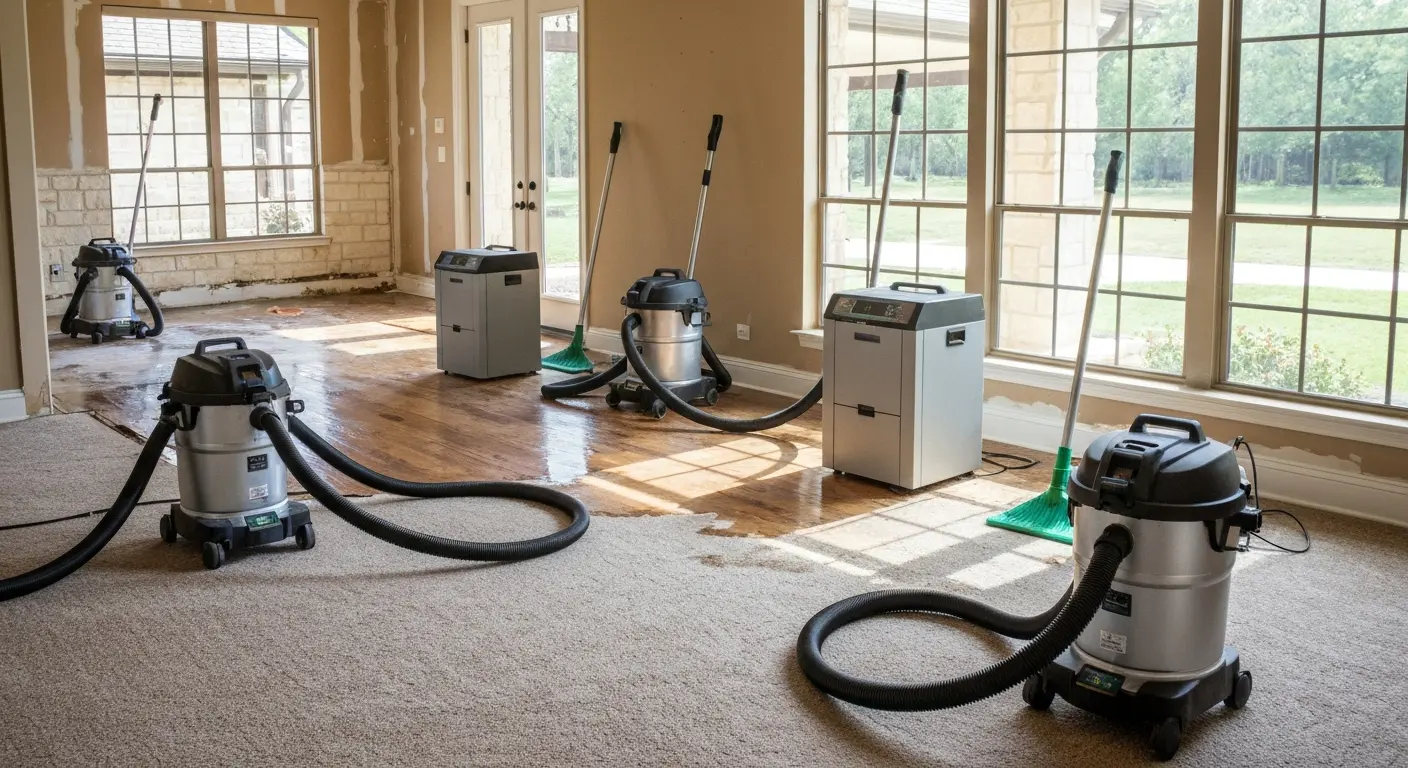
Professional water extraction setup in Leander residential property. Rapid response prevents mold and structural damage.
Fire Damage Restoration
Structure fires happen. Wildfire risks affect properties in the Hill Country areas near Leander. We remove soot, ash, and smoke residue. We also address water damage from firefighting and stabilize your home.
- Soot and ash cleanup from all surfaces
- Smoke odor removal and air quality restoration
- Water damage repair from firefighting efforts
- Structural stabilization and rebuilding
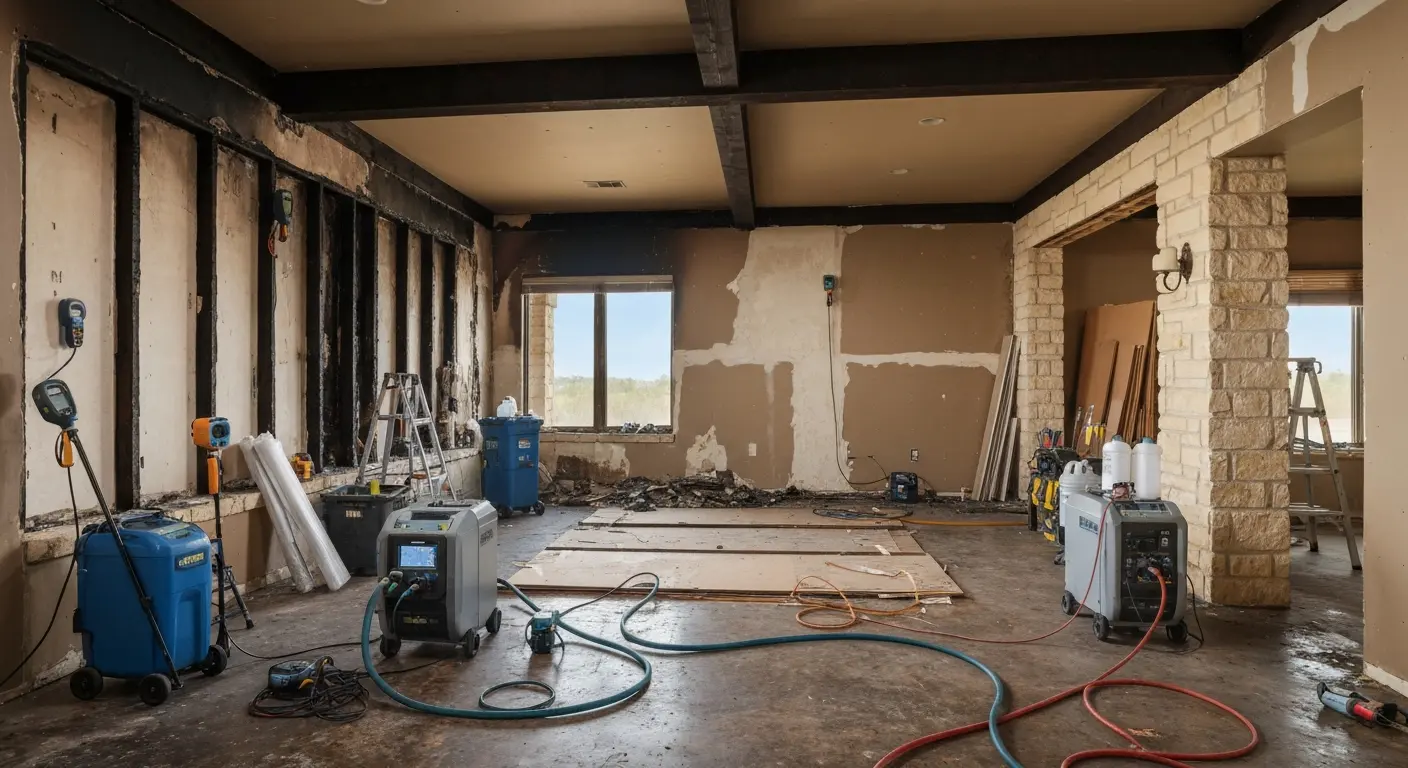
Fire-damaged interior assessment. Technicians remove contaminated materials and prepare for rebuild. Services available throughout Leander neighborhoods.
Emergency Water Mitigation
The first few hours after water damage are critical. We respond to minimize loss. Tarping, board-up, and temporary containment prevent further water intrusion in homes across Leander, from Old Town to Sarita Valley.
- Rapid response assessment and water removal
- Tarping and roof coverage for exposed areas
- Boarding and temporary protection
- Contents salvage and inventory documentation
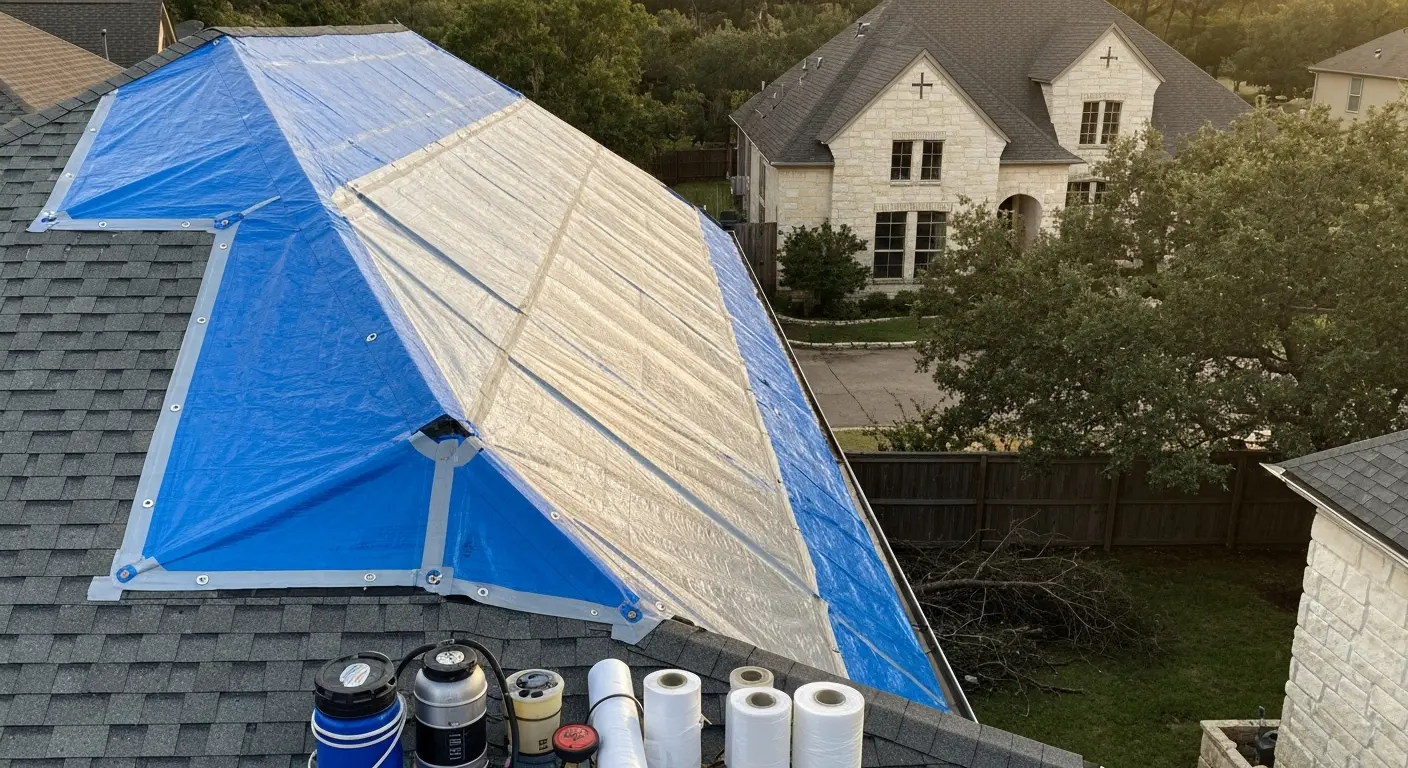
Emergency tarping protects Leander homes from further weather damage. Mitigation stops water intrusion within hours of initial call.
Why Local Expertise Matters
Leander's terrain, weather patterns, and building types create specific damage scenarios.
Flash Flooding & Creek Risk
Leander sits in the Texas Hill Country along Brushy Creek. Properties near Big Sandy Creek and Nameless Road face flood risk during heavy rain. We understand these drainage patterns and know which neighborhoods are most vulnerable—Sandy Creek, lakeside areas, and lower-elevation homes in Lakeline Ranch.
Properties built on elevation, like those in Bryson Ridge and Crystal Falls, drain better. Low-lying newer subdivisions, like Sarita Valley homes, need rapid response to prevent foundation saturation.
Heat & Humidity = Mold Risk
Central Texas summers are hot and humid. Wet drywall, carpet, and wood dry slowly without professional equipment. Mold grows in 24–48 hours if moisture isn't managed. We use industrial dehumidifiers and air movers standard in every Leander job—non-negotiable in this climate.
Wildfire & Structure Fire History
Leander experienced destructive wildfires in 2011 that burned 330 acres and destroyed 26 homes. Hill Country communities remain at risk. We're trained in soot restoration, smoke damage cleanup, and insurance documentation for fire events.
NEW CONSTRUCTION CHALLENGE: Many Leander homes (Sarita Valley, Reagan's Overlook, Travisso) are new. We understand modern building methods—spray foam insulation, engineered beams, luxury finishes—and how to dry and restore them properly.
Serving Leander & the Surrounding Area
We respond throughout Leander and surrounding communities—Cedar Park, Round Rock, Lago Vista, and beyond.
Key Leander Neighborhoods We Serve
- Downtown Leander: Newer homes and established neighborhoods along US Route 183
- Crystal Falls: Master-planned community with rolling hills and golf course homes
- Bryson Ridge: Newer subdivision with resort-style amenities
- Sarita Valley: New master-planned community with large lots and park access
- Reagan's Overlook: Luxury neighborhood with scenic views
- Sandy Creek/Big Sandy Areas: Flood-prone neighborhoods north of Leander (rapid response essential)
- Lakeline Ranch & Overlook Estates: Established communities with mature landscaping
- Deerbrooke: Upscale neighborhood with open-layout homes
Getting Here
We're located off US 183 in north Leander, convenient to all neighborhoods. Call immediately when damage occurs. We arrive ready to assess and begin mitigation the same day.
From Sarita Valley and south Leander, take Ronald Reagan Boulevard north toward US 183. From Downtown Leander, head north on US 183. Call when you're 10 minutes away so we're ready to meet you.
Water Damage Restoration: Common Questions
What should I do immediately after water damage?
Turn off the water source if safe, move valuables to dry areas, call us right away. Document damage with photos for insurance. Open windows if weather permits. Avoid walking through contaminated water. We'll handle the rest.
Does homeowner insurance cover water damage?
Standard policies cover sudden, accidental events like burst pipes and roof damage. Floods, slow leaks, and maintenance failures are usually excluded. We help document all damage and work with your adjuster to maximize coverage. Talk to your agent first.
Can water damage lead to mold in Leander homes?
Yes. Humidity and heat in Central Texas speed mold growth. Wet materials must be dried within 48 hours. We use industrial dehumidifiers and monitoring to prevent mold from starting. If mold appears, we address it immediately with remediation.
Are homes near Big Sandy Creek or Brushy Creek at higher risk?
Yes. Properties in floodplain areas (Sandy Creek, Nameless Road, low-lying lots) experience higher flood risk during heavy rain. Elevated homes in Bryson Ridge and Crystal Falls drain faster. Check your FEMA flood zone with the City of Leander; we know all the hotspots.
What's the difference between water extraction and drying?
Extraction removes standing water with pumps and wet vacs. Drying uses air movers and dehumidifiers to remove moisture from materials like drywall, insulation, and concrete. Both are essential. Extraction is urgent; drying takes days and requires continuous monitoring.
Can hardwood floors be saved after flooding?
Sometimes, if dried quickly and correctly. Solid wood swells and warps if left wet. We start drying immediately and assess cupping and damage. Some floors are restored; others need replacement. Engineered wood often doesn't survive. We evaluate and advise.
Fire Damage Restoration: Common Questions
What happens to my home after a fire?
Firefighters leave water damage, broken windows, and exposed areas. Soot coats everything. The house is unsafe until boarded, dried, and cleaned. We secure the property, remove contaminated materials, salvage what we can, and begin rebuild coordination.
Does insurance cover fire damage restoration?
Yes. Homeowner policies cover fire damage, cleanup, and water damage from firefighting. Contents coverage applies to personal property. Notify your insurance company immediately. We work with adjusters and provide detailed damage documentation for your claim.
How do you remove soot and smoke odor?
Soot requires specialized cleaning—dry and wet methods depending on surfaces. Smoke odor is trapped in HVAC systems, insulation, and wood. We use ozone treatment, thermal fogging, and activated charcoal. Air quality testing confirms the space is clean before reentry.
Is my home safe to live in during fire restoration?
No, initially. Fire-damaged homes have structural concerns, open areas, contaminated air, and hazardous debris. Fire departments tag damaged structures as unsafe. Cleanup and boarding must happen first. Once soot is removed and HVAC is cleaned, the space is safer. We obtain clearance before reoccupancy.
What if wildfire threatens my property?
Leander is in the Texas Hill Country; wildfires are a real risk. If evacuation is ordered, leave. If your home is threatened or damaged, we respond as soon as it's safe. We clear debris, assess structural integrity, and begin restoration. Have a current insurance policy and emergency contacts ready.
DISCOVER WHAT OUR CUSTOMERS HAVE TO SAY ABOUT US
REVIEWS
proudly serving these areas
Austin, TX
Central Texas, TX
College Station, TX
Georgetown, TX
Killeen, TX
Leander, TX
New Braunfels, TX
Round Rock, TX
READY TO take the next step?
get a free quote TODAY!

QUICK LINKS
our services
service areas
operating HOURS
Mon: 12:00 am - 11:59 pm
Tue: 12:00 am - 11:59 pm
Wed: 12:00 am - 11:59 pm
Thu: 12:00 am - 11:59 pm
Fri: 12:00 am - 11:59 pm
Sat: 12:00 am - 11:59 pm
Sun: 12:00 am - 11:59 pm